A complete guide to coronary angioplasty — procedure, types, risks, recovery, and cost in India, explained by an Interventional Cardiologist.
If your doctor has recommended angioplasty, or you simply want to understand what the procedure involves — you are in the right place. This guide covers everything: what angioplasty is, how it works, the different types, what to expect during recovery, potential risks, and the approximate cost of angioplasty in India.
What is Angioplasty?
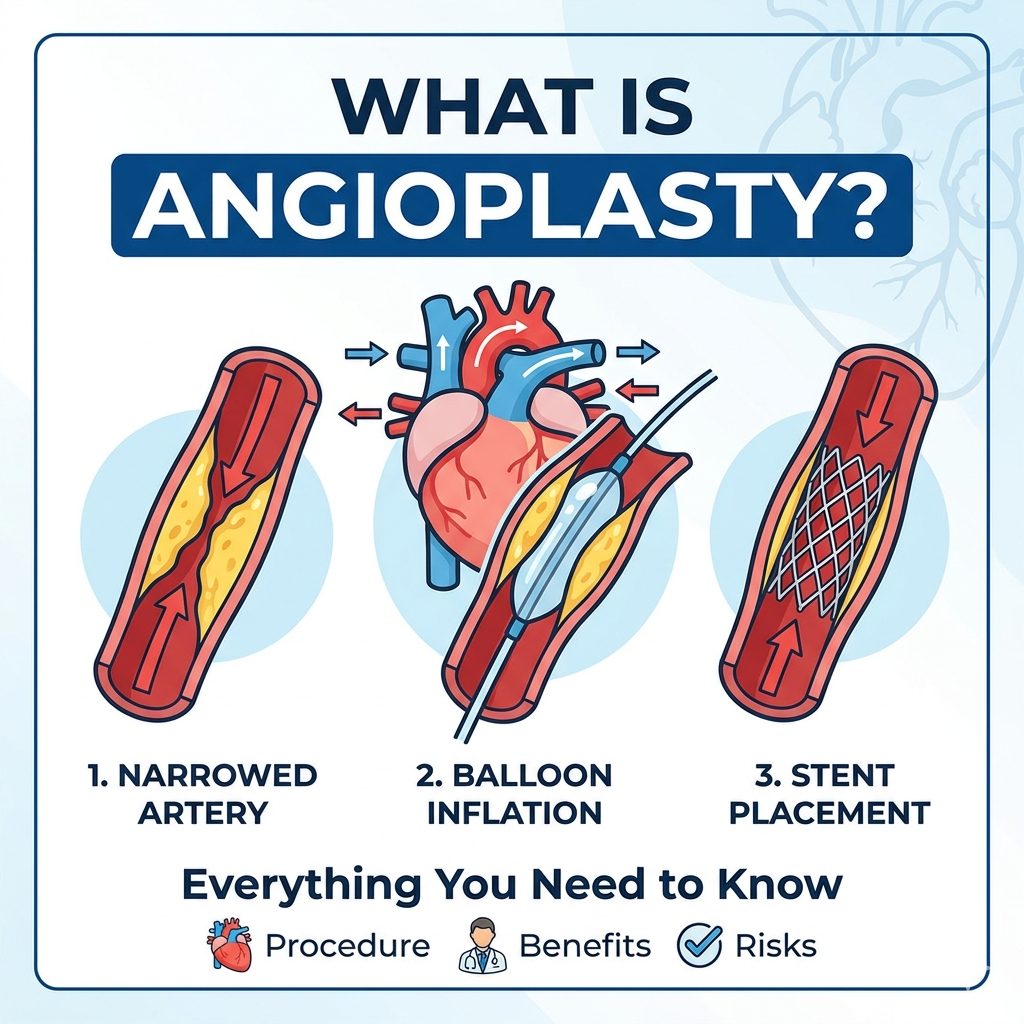
Angioplasty — also known as Percutaneous Coronary Intervention (PCI) — is a minimally invasive medical procedure used to open blocked or narrowed coronary arteries (the blood vessels that supply the heart). It is one of the most common and effective treatments for coronary artery disease (CAD) and heart attacks.
When fatty deposits (plaque) build up inside the artery walls over time, blood flow to the heart muscle becomes restricted. This condition is called atherosclerosis. Angioplasty physically widens the artery, restoring normal blood flow and relieving symptoms like chest pain (angina) and breathlessness.
Unlike bypass surgery, angioplasty does not require opening the chest. A thin, flexible tube called a catheter is inserted through the wrist or groin and guided to the blocked artery — making the procedure far less invasive and allowing faster recovery.
Types of Angioplasty:
There are two main types of angioplasty performed today:
1. Balloon Angioplasty
In this technique, a tiny balloon at the tip of the catheter is inflated at the site of the blockage. The balloon compresses the plaque against the artery walls and widens the vessel. It is often used as a first step before stent placement.
2. Coronary Stenting (Angioplasty with Stent)
After balloon dilation, a small metal mesh tube called a stent is placed permanently inside the artery to keep it open. Modern drug-eluting stents (DES) are coated with medication that prevents the artery from narrowing again — significantly reducing re-blockage rates.
| Feature | Balloon Angioplasty | Angioplasty + Stent |
|---|---|---|
| Permanent implant? | No | Yes (stent stays) |
| Re-blockage risk | Higher (30–40%) | Lower (5–10% with DES) |
| Used for | Small vessels, select cases | Most blockages |
| Recovery time | 1–2 days | 1–3 days |
| Long-term outcome | Good | Excellent |
How is Angioplasty Performed? Step-by-Step
The procedure takes place in a specialised room called a cardiac catheterisation laboratory (Cath Lab). Here is what happens, step by step:
- Preparation
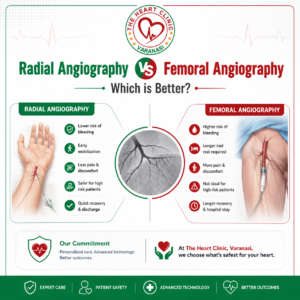
You will be given a local anaesthetic and a mild sedative. The access site — usually the radial artery in your wrist or the femoral artery in your groin — is cleaned and numbed.
2. Catheter Insertion
A thin, flexible catheter is threaded through the artery and guided up to the coronary arteries. You will not feel this as there are no nerve endings inside blood vessels.
3. Angiography (Imaging)
A contrast dye is injected, and X-ray images are taken to precisely locate the blockage. This part of the procedure is called coronary angiography.
4. Balloon Inflation
A balloon catheter is advanced to the blockage site and inflated to compress the plaque and widen the artery. This takes only a few seconds and may cause brief chest discomfort.
5. Stent Deployment (if needed)
A stent is placed over the balloon and expanded at the blockage site. Once the balloon is deflated and removed, the stent remains, holding the artery open permanently.
6. Completion & Monitoring
Final imaging confirms the blockage is cleared. The catheter is removed and the access site is closed. You are shifted to a recovery room for observation.
Recovery After Angioplasty
One of the biggest advantages of angioplasty over bypass surgery is the significantly faster recovery time. Here is what to expect:
In the hospital: Most patients stay for 1 to 2 days. Your heart rate, blood pressure, and the access site are monitored. You can typically sit up and walk within a few hours of the procedure.
At home (first 1–2 weeks): Avoid strenuous activity and heavy lifting. You may experience some soreness at the catheter insertion site. Blood-thinning medications (such as aspirin and clopidogrel) must be taken regularly to prevent blood clots around the stent.
Full recovery: Most patients return to daily activities within one week and to work within 1–2 weeks. Regular follow-up with your cardiologist is essential — typically at 1 month, 3 months, and 6 months post-procedure.
Cardiac rehabilitation is strongly recommended. A supervised exercise and lifestyle programme can significantly improve long-term outcomes and reduce the risk of future cardiac events.
Risks and Complications
Angioplasty is a very safe procedure when performed by an experienced interventional cardiologist. However, as with any medical procedure, there are potential risks that you should be aware of:
Common (Minor)
- Bruising at catheter site
- Temporary chest discomfort
- Minor bleeding
- Allergic reaction to contrast dye
Rare (Serious)
- Re-narrowing of artery (restenosis)
- Stent thrombosis (blood clot)
- Kidney damage from dye
- Stroke or heart attack (very rare)
The vast majority of angioplasty procedures are completed without any major complications. Your cardiologist will discuss your personal risk factors in detail before recommending the procedure.
Angioplasty Cost in India
Angioplasty is significantly more affordable in India compared to Western countries, without any compromise in quality at accredited cardiac centres. Costs vary depending on the type of stent used, number of blockages treated, hospital facilities, and the city of treatment.
| Procedure | Approx. Cost (₹) | Notes |
|---|---|---|
| Balloon Angioplasty (no stent) | ₹80,000 – ₹1,20,000 | Rare; mainly for small vessels |
| Angioplasty + Bare Metal Stent | ₹1,20,000 – ₹1,80,000 | Older stent technology |
| Angioplasty + Drug-Eluting Stent | ₹1,80,000 – ₹3,50,000 | Most commonly performed |
| Multi-vessel Angioplasty | ₹3,00,000 – ₹5,00,000 | For 2–3 blockages |
Note: Many health insurance policies in India — including PMJAY (Ayushman Bharat) — cover angioplasty. Check your policy or speak to our team to understand your coverage.
Who Needs Angioplasty?
Your cardiologist may recommend angioplasty if you have:
- Severe chest pain (angina) that does not respond to medications
- A heart attack (angioplasty is the fastest way to open a blocked artery)
- Significant narrowing (70% or more) found on a coronary angiography
- Reduced blood flow to the heart confirmed by a stress test or imaging
Not everyone is a candidate for angioplasty. Your overall health, the location and complexity of the blockage, and other factors determine whether PCI, bypass surgery, or medical management is the most appropriate treatment for you.
Frequently Asked Questions
Is angioplasty a major surgery?
No. Angioplasty is a minimally invasive procedure — not open-heart surgery. It does not require cutting open the chest, and most patients go home within 1–2 days. Recovery is significantly faster than bypass surgery.
How long does a heart stent last?
Modern drug-eluting stents are designed to last a lifetime. The stent becomes permanently incorporated into the artery wall. However, it is important to maintain a heart-healthy lifestyle and take prescribed medications to prevent future blockages in other arteries.
Can angioplasty be done without anaesthesia?
Angioplasty is performed under local anaesthesia with mild sedation. You remain conscious but relaxed throughout the procedure. General anaesthesia is not required, which further reduces recovery time and associated risks.
What is the difference between angiography and angioplasty?
Coronary angiography is a diagnostic test that uses contrast dye and X-rays to visualise the coronary arteries and detect blockages. Angioplasty is a therapeutic procedure that uses a balloon and stent to open those blockages. Angiography is often done immediately before angioplasty in the same session.
Is angioplasty covered under health insurance in India?
Yes, angioplasty is covered under most individual and family health insurance policies in India, including government schemes like Ayushman Bharat PMJAY. Coverage amounts vary depending on your policy. It is advisable to contact your insurance provider or our billing team for details specific to your plan.
Have Questions About Your Heart?
Dr. Sudhakar Singh offers expert consultations for coronary artery disease, chest pain, angioplasty, and all interventional cardiology needs. Book your appointment today.