Expert Advice by Dr. Sudhakar Singh – DM Interventional Cardiologist
Heart-related problems are increasing due to stress, unhealthy lifestyle, and poor diet. Early diagnosis plays a key role in preventing serious conditions like heart attack.
One of the most important diagnostic tests for heart disease is Angiography. Many people search online for “angiography kya hai,” “angiography kab hoti hai,” “angiography procedure,” or “angiography ke baad kya karein” when they experience chest pain or symptoms of heart blockage.
According to Dr. Sudhakar Singh, DM Interventional Cardiologist, angiography helps detect blockages in heart arteries and guides further treatment like angioplasty or bypass surgery.
What is Angiography?
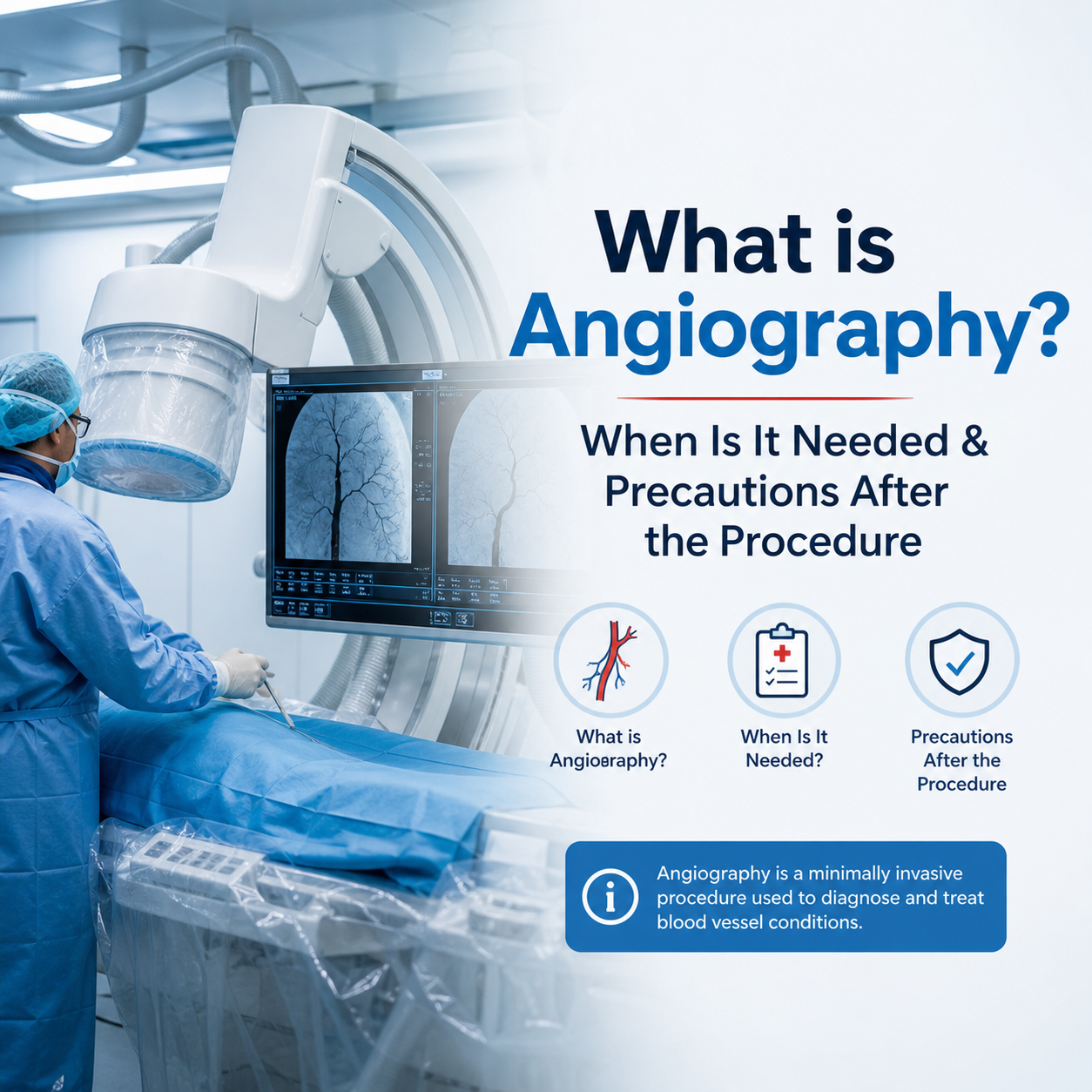
Angiography is a medical test used to check blockages or narrowing in blood vessels, especially the heart arteries.
How it works:
- A special dye (contrast) is injected into the arteries
- X-ray images are taken
- Blood flow and blockages become clearly visible
People often search for “angiography test kya hota hai” to understand this procedure.
When is Angiography Needed?
Angiography is recommended when doctors suspect heart-related problems.
You may need angiography if you have:
- Chest pain (Angina)
- Shortness of breath
- Abnormal ECG or stress test
- History of heart attack
- High risk of heart disease (diabetes, BP)
- Pain spreading to arm, jaw, or neck
Patients frequently search:
“angiography kab karvani chahiye,” “heart blockage test,” “symptoms of blocked arteries”
Early angiography helps prevent serious complications.
Angiography Procedure (Simple Explanation)
Before Procedure:
- Fasting for a few hours
- Basic tests done
- Consent taken
During Procedure:
- Local anesthesia is given
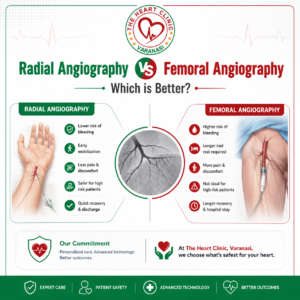
- Catheter inserted via wrist or groin
- Dye injected and X-ray images taken
Duration:
- Usually 20–30 minutes
Most patients remain awake during the procedure.
Is Angiography Painful?
This is one of the most searched questions:
👉 “Is angiography painful?”
- It is generally painless
- Only mild discomfort at insertion site
- Safe and commonly performed procedure
Precautions After Angiography
Taking care after angiography is very important for recovery.
Immediate Precautions:
- Rest for 4–6 hours
- Avoid bending the affected limb
- Keep the insertion site clean
First 24–48 Hours:
- Avoid heavy lifting
- Drink plenty of water (to flush dye)
- Avoid strenuous activity
General Care:
- Watch for swelling or bleeding
- Follow prescribed medicines
- Attend follow-up consultation
People often search:
“angiography ke baad kya karein,” “recovery after angiography,” “angiography precautions”
Possible Risks (Rare)
Angiography is generally safe, but in rare cases:
- Minor bleeding
- Infection
- Allergic reaction to dye
Under expert care, complications are minimal.
Why Choose Dr. Sudhakar Singh?
Patients searching for:
- Best cardiologist
- Angiography doctor near me
- Heart specialist
trust Dr. Sudhakar Singh (DM Interventional Cardiologist) for:
✔ Accurate diagnosis
✔ Advanced cardiac care
✔ Expertise in angiography & angioplasty
✔ Patient-focused treatment
When Should You Visit a Heart Specialist?
Consult immediately if you experience:
- Chest pain
- Breathlessness
- Irregular heartbeat
- Sudden fatigue
- Family history of heart disease
Early detection can save your life.
Conclusion
Angiography is a highly effective and life-saving diagnostic test that helps detect heart blockages early. With proper guidance and precautions, it is a safe procedure with quick recovery.
If you are experiencing heart-related symptoms, consult Dr. Sudhakar Singh, DM Interventional Cardiologist for expert diagnosis and timely treatment.