Expert Advice by Dr. Sudhakar Singh – DM Interventional Cardiologist
Heart diseases are increasing rapidly due to lifestyle changes, stress, and unhealthy habits. Early diagnosis plays a crucial role in preventing serious complications like heart attack or blockage.
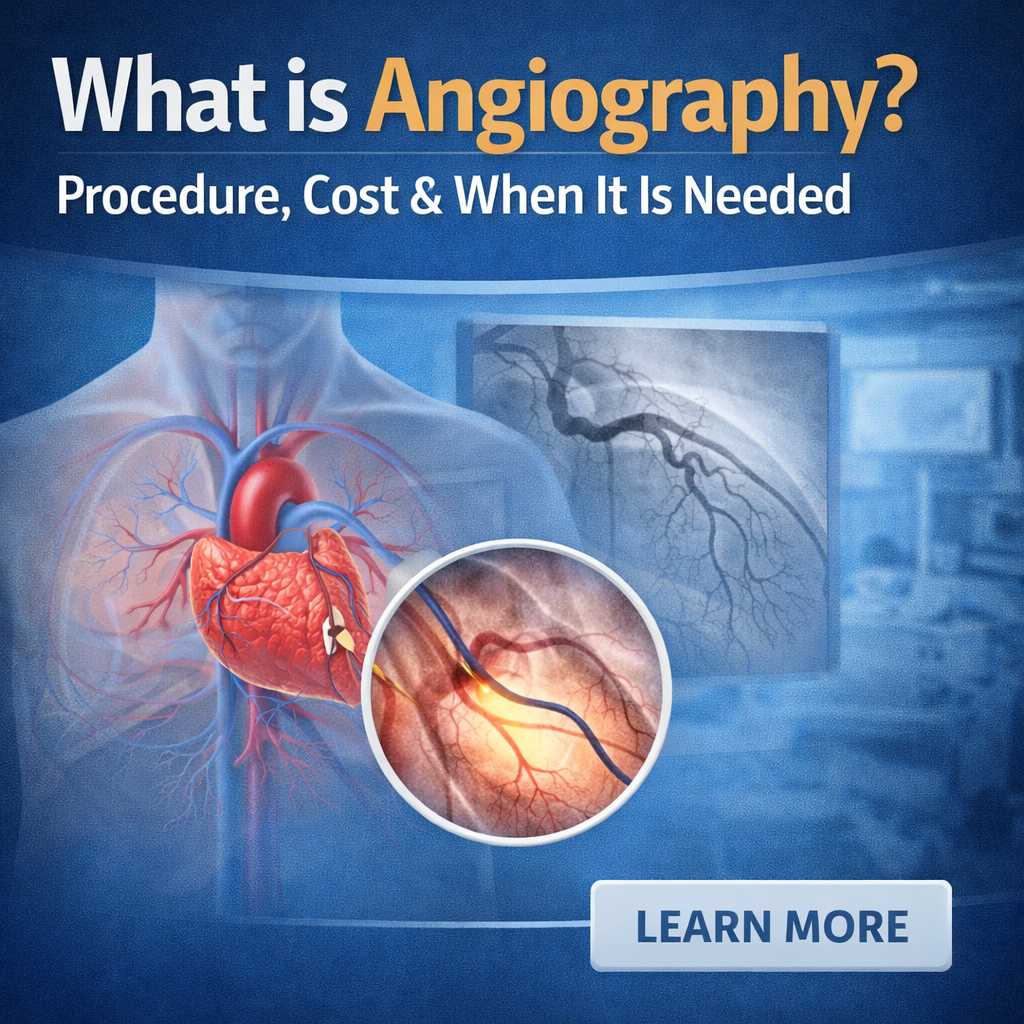
One of the most important diagnostic tests used in cardiology is Angiography. Many people search online for “what is angiography,” “angiography procedure,” “angiography cost,” or “when angiography is needed” when they experience chest pain or heart-related symptoms.
According to Dr. Sudhakar Singh, DM Interventional Cardiologist, angiography is a highly effective test to detect blockages in heart arteries and guide further treatment.
What is Angiography?
Angiography is a medical imaging procedure used to examine blood vessels, especially the coronary arteries (heart arteries).
In this test:
- A special dye (contrast) is injected into the arteries
- X-ray images are taken
- Doctors can clearly see blood flow and blockages
People often search for “angiography test meaning” to understand how it works.
Why is Angiography Done?
Angiography helps detect problems in heart blood vessels.
It is recommended for:
- Chest pain (Angina)
- Suspected heart blockage
- Shortness of breath
- Abnormal ECG or stress test
- Previous heart attack
- Before angioplasty or bypass surgery
Patients searching for “when angiography is required” usually have these symptoms.
When is Angiography Needed?
You may need angiography if:
- You have frequent chest discomfort
- Pain spreads to arm, neck, or jaw
- You feel breathless during normal activity
- You have diabetes with heart symptoms
- You have high risk of heart disease
Early angiography helps prevent major cardiac events.
Angiography Procedure (Step-by-Step)
Many patients feel anxious about the procedure. Here is a simple explanation:
1. Preparation
- Patient is advised to fast for a few hours
- Basic tests are done
- Consent is taken
2. During the Procedure
- Local anesthesia is given
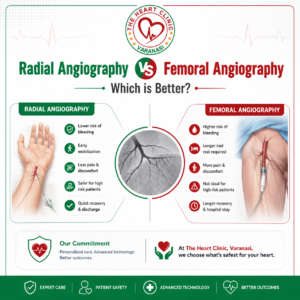
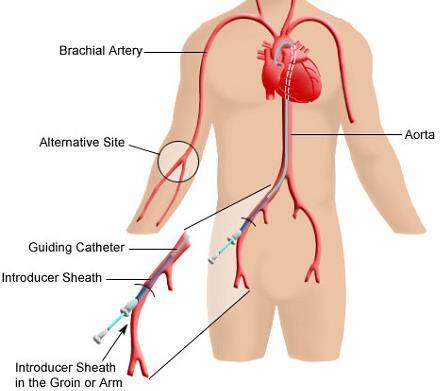
- A thin tube (catheter) is inserted through wrist (radial) or groin
- Contrast dye is injected
- X-ray images are taken
The procedure usually takes 20–30 minutes.
3. After the Procedure
- Patient is monitored for a few hours
- Most patients can go home the same day
- Normal routine can resume soon
People often search for “is angiography painful?” — it is generally painless, with only mild discomfort.
Types of Angiography
. Coronary Angiography (Most Common)
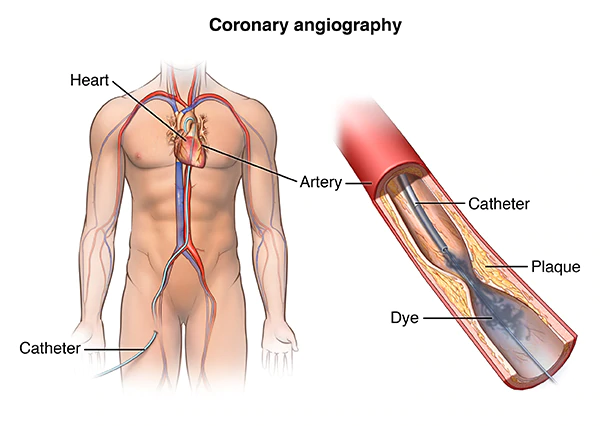
Coronary Angiography is the most commonly performed type of angiography. It is used to check the blood vessels (coronary arteries) of the heart.
What it does:
- Detects blockages in heart arteries
- Shows how blood is flowing to the heart
- Helps diagnose conditions like heart attack, angina, and coronary artery disease
How it is done:
- A thin catheter is inserted through the wrist or groin
- Contrast dye is injected into heart arteries
- X-ray images are taken in real time
When it is needed:
- Chest pain (angina)
- Suspected heart blockage
- Abnormal ECG or stress test
- Before angioplasty or bypass surgery
coronary angiography test, heart blockage test, angiography for chest pain
2. CT Angiography (Non-Invasive)
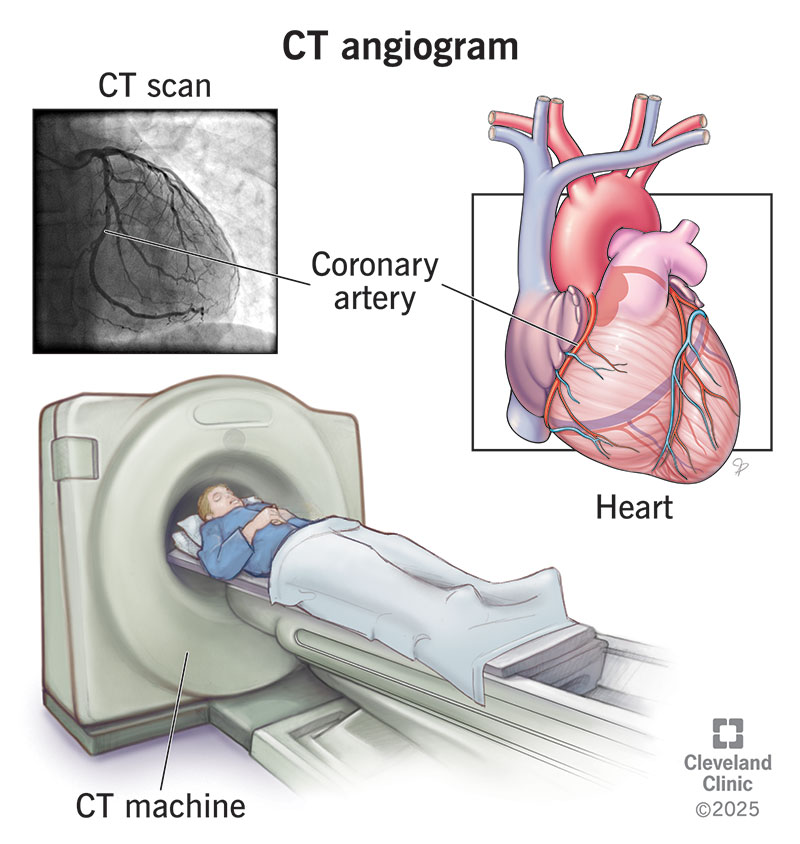
CT Angiography (CTA) is a modern, non-invasive method to examine blood vessels using a CT scan machine.
What it does:
- Provides detailed images of blood vessels without inserting a catheter
- Detects early blockages or narrowing
- Used for heart, brain, lungs, and other organs
How it is done:
- Contrast dye is injected through a vein (usually in the arm)
- CT scan captures high-resolution images
Advantages:
✔ No surgery or catheter insertion
✔ Quick and painless
✔ Useful for early screening
When it is needed:
- Mild chest pain evaluation
- Preventive heart checkup
- Screening for coronary artery disease
CT angiography, non-invasive angiography, CT scan for heart arteries
3. Peripheral Angiography
Peripheral Angiography is used to examine blood flow in arteries outside the heart, especially in the legs, arms, or neck.
What it does:
- Detects blockages or narrowing in peripheral arteries
- Helps diagnose Peripheral Artery Disease (PAD)
Symptoms that may require it:
- Leg pain while walking
- Numbness or weakness in limbs
- Cold feet or poor circulation
- Non-healing wounds
How it is done:
- Similar to coronary angiography
- Catheter + contrast dye + X-ray imaging
Why it is important:
- Prevents serious complications like gangrene or limb damage
- Helps guide treatment like angioplasty
peripheral angiography, leg blood flow test, PAD diagnosis
Benefits of Angiography
Angiography is a life-saving diagnostic tool.
Key Benefits:
✔ Detects blockages accurately
✔ Helps prevent heart attacks
✔ Guides angioplasty or bypass surgery
✔ Quick and safe procedure
✔ Minimal recovery time
Angiography Cost in India / Varanasi
One of the most common searches is “angiography cost.”
Estimated Cost:
- ₹8,000 to ₹25,000 (approx.)
- Depends on hospital, technology, and patient condition
For exact cost, consultation with a cardiologist is recommended.
Risks of Angiography
Angiography is generally safe when performed by experienced specialists.
Possible Risks (Rare):
- Mild bleeding at insertion site
- Allergic reaction to dye
- Temporary discomfort
Under expert care, complications are minimal.
Why Consult Dr. Sudhakar Singh?
Patients searching for:
- Best cardiologist in Varanasi
- Angiography doctor near me
- Heart specialist in Varanasi
often consult Dr. Sudhakar Singh (DM Interventional Cardiologist) for:
✔ Accurate diagnosis
✔ Advanced cardiac care
✔ Expertise in angiography & angioplasty
✔ Patient-focused treatment
When Should You See a Cardiologist?
Consult immediately if you experience:
- Chest pain
- Breathlessness
- Irregular heartbeat
- Sudden fatigue
- Family history of heart disease
Early diagnosis can save lives.
Conclusion
Angiography is one of the most important tests to detect heart blockages and prevent serious cardiac problems. It is safe, quick, and highly effective.
If you are experiencing symptoms or are at risk of heart disease, consult Dr. Sudhakar Singh, DM Interventional Cardiologist for expert evaluation and timely treatment.
Early detection is the key to a healthy heart.