Expert Opinion by Dr. Sudhakar Singh, DM Interventional Cardiologist
When a patient is advised to undergo coronary angiography, one of the most common questions is: “Which is better—radial angiography or femoral angiography?”
As advancements in cardiology continue to improve patient comfort and safety, the approach used for angiography has evolved significantly. Today, both radial angiography (through the wrist) and femoral angiography (through the groin) are well-established procedures used to diagnose and manage heart conditions. However, the ideal approach depends on the patient’s medical condition, anatomy, and procedural requirements.
As a DM Interventional Cardiologist, Dr. Sudhakar Singh believes that informed patients make better healthcare decisions. Here’s a detailed comparison to help you understand both techniques.
Understanding Coronary Angiography
Coronary angiography is a specialized diagnostic procedure used to assess the blood flow in the coronary arteries—the vessels that supply oxygen-rich blood to the heart. It helps identify blockages, narrowing, or other abnormalities that may be responsible for chest pain, shortness of breath, or heart attacks.
To perform the procedure, a thin catheter is inserted into an artery and guided to the heart. The two most commonly used access points are:
- Radial artery (wrist)
- Femoral artery (groin)
Both methods are effective, but they differ in several important ways.
What is Radial Angiography?
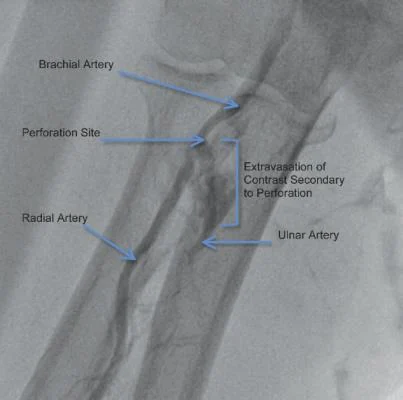
Radial angiography involves accessing the heart through the radial artery located in the wrist. Over the past decade, this technique has become increasingly preferred in modern cardiac practice.
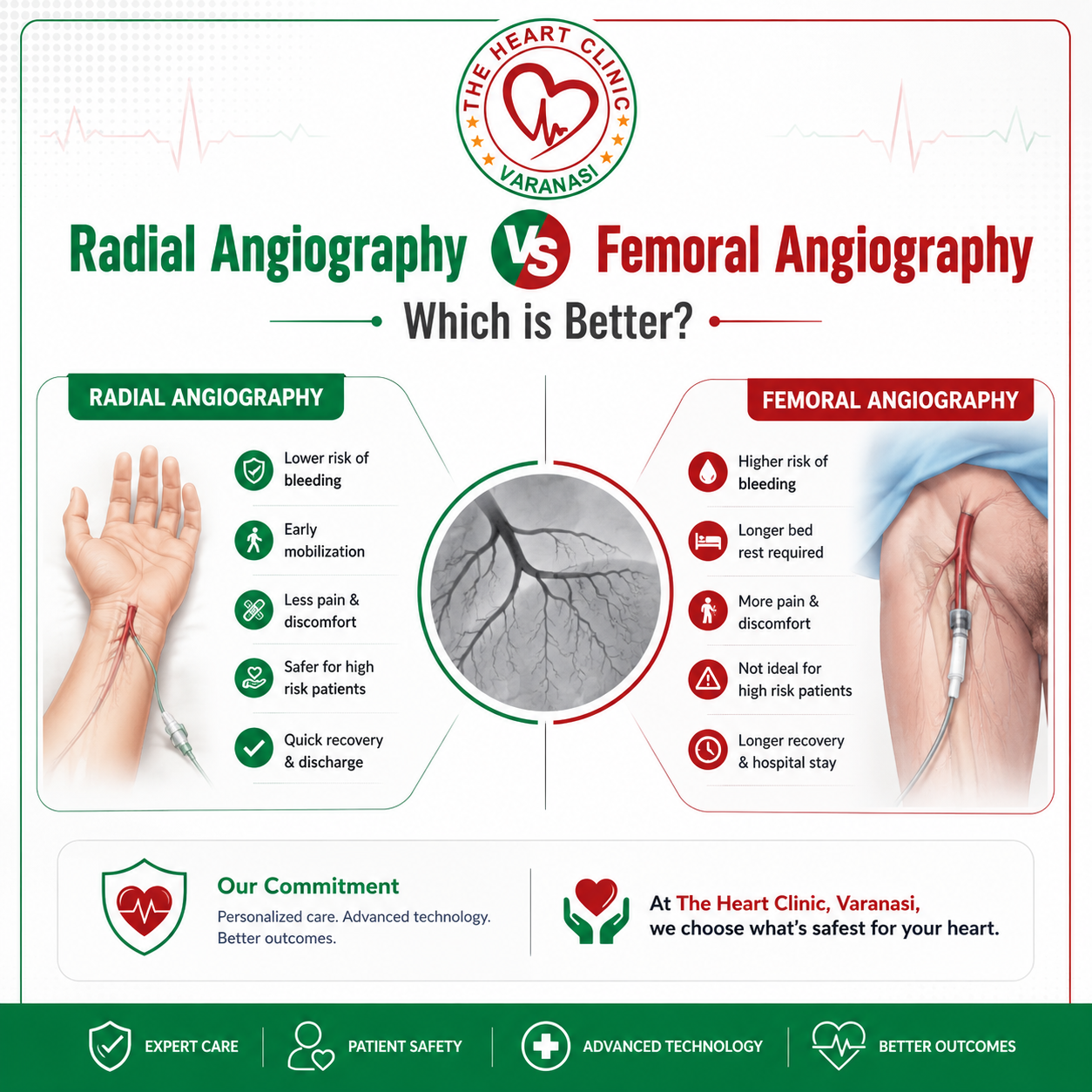
Benefits of Radial Angiography
Enhanced Patient Comfort
One of the biggest advantages of radial angiography is convenience. Since the access point is in the wrist, patients can sit up, move around, and resume light activity much sooner after the procedure.
Lower Risk of Bleeding
Because the radial artery is smaller and easily compressed, the risk of significant bleeding or hematoma formation is considerably lower compared to femoral access.
Faster Recovery
Patients undergoing radial angiography generally experience shorter observation times and, in many cases, same-day discharge.
Better Safety Profile
For patients taking blood thinners or those at higher bleeding risk, radial access is often considered the safer option.
What is Femoral Angiography?
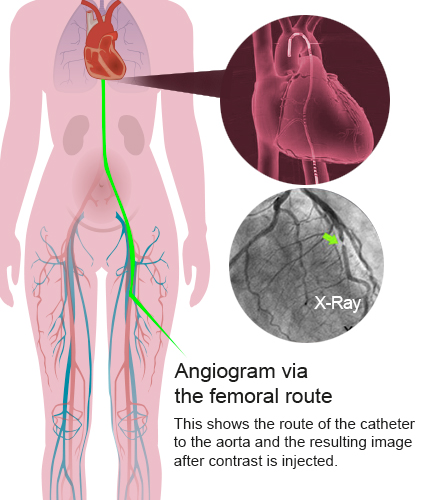
Femoral angiography uses the femoral artery in the groin as the access route. This has been the traditional approach for many years and continues to be an important option in interventional cardiology.
Benefits of Femoral Angiography
Suitable for Complex Procedures
The femoral artery is larger, allowing easier insertion of bigger catheters and specialized devices required in certain advanced procedures.
Reliable Access in Challenging Cases
Patients with small radial arteries, vessel spasms, abnormal anatomy, or weak wrist pulses may be better suited for femoral access.
Preferred in Specific Emergency Situations
In some urgent or technically demanding interventions, femoral access may provide quicker or more practical procedural support.
Radial vs Femoral Angiography: Key Comparison
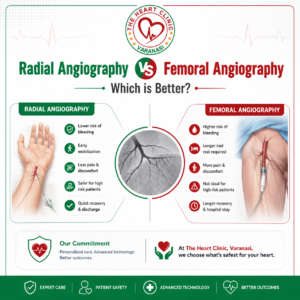
| Factor | Radial Angiography | Femoral Angiography |
|---|---|---|
| Access Site | Wrist | Groin |
| Recovery Time | Faster | Longer |
| Bleeding Risk | Lower | Higher |
| Patient Comfort | Higher | Moderate |
| Mobility After Procedure | Early walking possible | Bed rest required |
| Complex Procedure Support | Limited in some cases | Better |
| Hospital Stay | Often shorter | May be longer |
Which One is Better?
In current cardiac practice, radial angiography is often considered the preferred approach for routine coronary angiography and many angioplasty procedures due to its safety and patient comfort advantages.
However, medicine is not one-size-fits-all.
Femoral angiography remains highly valuable in cases involving:
- Complex coronary anatomy
- Need for larger interventional equipment
- Peripheral vascular challenges
- Failed radial access attempts
- Certain emergency cardiac interventions
The right decision depends on a detailed clinical evaluation.
Dr. Sudhakar Singh’s Expert Perspective
According to Dr. Sudhakar Singh, DM Interventional Cardiologist, the focus should always be on choosing the safest and most effective approach for each individual patient rather than applying a single standard to everyone.
With modern advancements, radial access has transformed patient experience significantly, but femoral access continues to play a critical role in advanced cardiac interventions.
An experienced interventional cardiologist evaluates:
- Patient anatomy
- Clinical urgency
- Existing medical conditions
- Bleeding risk
- Type of planned intervention
before selecting the ideal access route.
Conclusion
Both radial and femoral angiography are safe and effective diagnostic techniques when performed by experienced hands.
For most patients, radial angiography offers greater comfort, faster recovery, and fewer complications. However, femoral angiography remains essential in specific clinical scenarios where technical precision and larger access are required.
If you have been advised to undergo coronary angiography and want expert guidance, consulting an experienced interventional cardiologist in Varanasi can help you make an informed decision.
Your heart deserves precise diagnosis, advanced care, and expert clinical judgment.