Expert Advice by Dr. Sudhakar Singh – DM Interventional Cardiologist
Heart rhythm problems (arrhythmias) are becoming increasingly common, especially in older adults and patients with heart disease. When the heart beats too slowly or irregularly, it may not pump enough blood to the body.
In such cases, doctors may recommend a Pacemaker Implantation. Many people search online for “pacemaker kya hota hai,” “pacemaker implantation procedure,” “when pacemaker is needed,” or “heart rhythm treatment” when they experience symptoms like dizziness or fainting.
According to Dr. Sudhakar Singh, DM Interventional Cardiologist, pacemaker implantation is a safe and effective procedure that helps maintain a normal heart rhythm.
What is a Pacemaker?
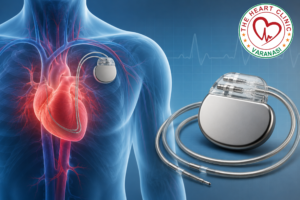
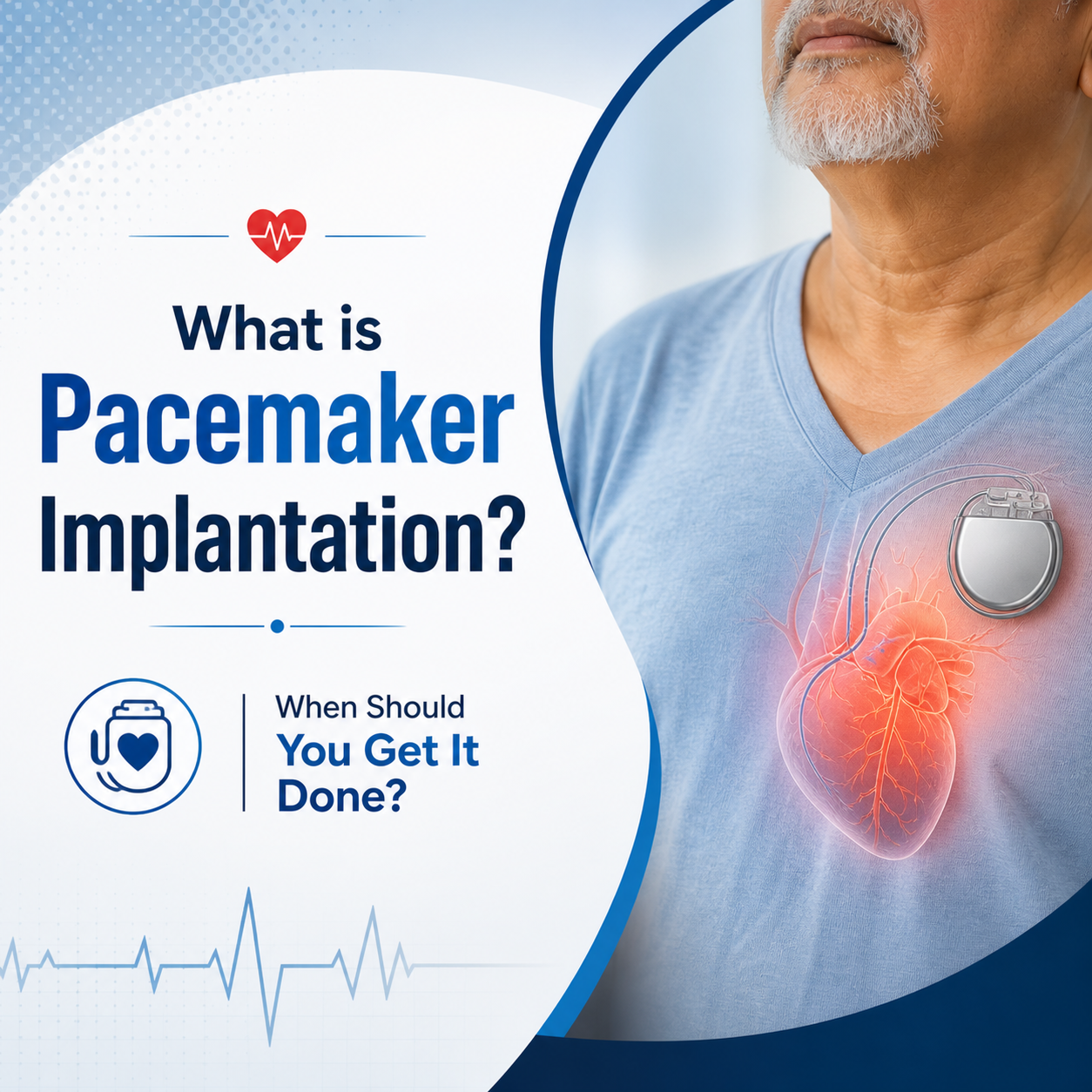
A pacemaker is a small electronic device that is implanted under the skin of the chest to help control abnormal heart rhythms.
It consists of:
- A small battery-powered generator
- Wires (leads) connected to the heart
The pacemaker sends electrical signals to keep the heart beating at a normal rate.
What is Pacemaker Implantation?
Pacemaker implantation is a medical procedure in which the device is placed under the skin (usually near the collarbone) and connected to the heart through leads.
It is commonly recommended for patients with slow heart rate (bradycardia) or irregular heartbeat.
When is Pacemaker Needed?
You may need a pacemaker if your heart is not beating properly.
Common Conditions Include:
- Bradycardia (slow heart rate)
- Heart block (signal delay in heart)
- Irregular heartbeat (arrhythmia)
- Fainting episodes due to heart rhythm issues
- Post heart attack complications
Symptoms That Indicate Need:
- Dizziness
- Fainting (syncope)
- Fatigue
- Breathlessness
- Irregular pulse
People often search:
“pacemaker kab lagta hai,” “slow heart rate treatment,” “irregular heartbeat solution”
Pacemaker Implantation Procedure
Before Procedure:
- Basic heart tests (ECG, Echo)
- Blood tests
- Fasting for a few hours
During Procedure:
- Local anesthesia is given
- Small incision made near chest
- Leads inserted into heart through veins
- Pacemaker device placed under skin
⏱️ Duration: 1–2 hours
After Procedure:
- Patient monitored for few hours or 1 day
- Mild pain or swelling may occur
- Normal activities can resume gradually
Benefits of Pacemaker
✔ Maintains normal heart rhythm
✔ Reduces dizziness and fainting
✔ Improves quality of life
✔ Prevents serious heart complications
✔ Helps heart function efficiently
Precautions After Pacemaker Implantation
Immediate Care:
- Avoid heavy lifting for few weeks
- Keep wound area clean and dry
- Avoid sudden arm movements
Long-Term Precautions:
- Avoid strong magnetic fields
- Inform doctors before medical tests
- Regular follow-up check-ups
- Carry pacemaker ID card
People search:
“life after pacemaker,” “pacemaker precautions,” “can I live normal life after pacemaker”
👉 Yes, most patients live a normal and active life.
Risks (Rare)
Pacemaker implantation is generally safe.
Possible risks include:
- Infection
- Bleeding
- Lead displacement
Under expert care, complications are minimal.
Why Choose Dr. Sudhakar Singh?
Patients searching for:
- Best cardiologist
- Pacemaker doctor near me
- Heart rhythm specialist
trust Dr. Sudhakar Singh (DM Interventional Cardiologist) for:
✔ Expertise in cardiac procedures
✔ Advanced treatment approach
✔ Patient-focused care
✔ Accurate diagnosis
When Should You Consult a Cardiologist?
Consult immediately if you have:
- Frequent dizziness
- Fainting episodes
- Slow or irregular heartbeat
- Persistent fatigue
Early treatment can prevent serious complications.
Conclusion
Pacemaker implantation is a life-saving procedure for patients with abnormal heart rhythms. It is safe, effective, and significantly improves quality of life.
If you are experiencing symptoms of irregular heartbeat, consult Dr. Sudhakar Singh, DM Interventional Cardiologist for expert advice and timely treatment.